
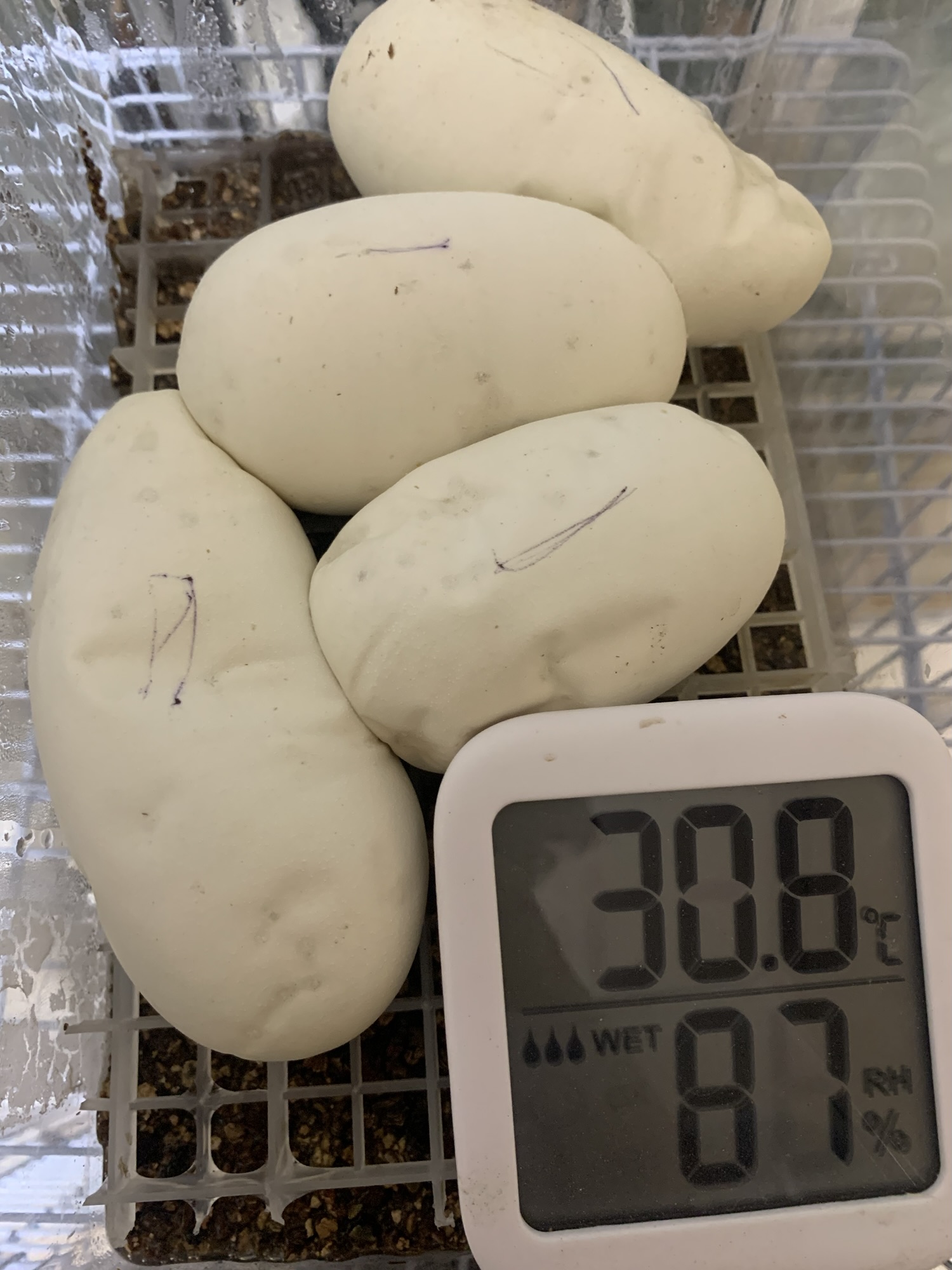
Recently, a ball python (Python regius) in the collection laid a clutch of eggs. Immediately after the eggs were laid, they were moved to an environment where humidity and temperature could be properly maintained.
Initial response after laying
Ball pythons naturally coil around their eggs to provide warmth, but for this clutch the decision was made to switch to artificial incubation in order to stabilize conditions. Maintaining both consistent humidity and temperature is critical for egg management.
Candling the eggs
Approximately three days after the eggs were laid, candling was performed. Candling is a method of examining eggs by shining a light through them to observe internal development.
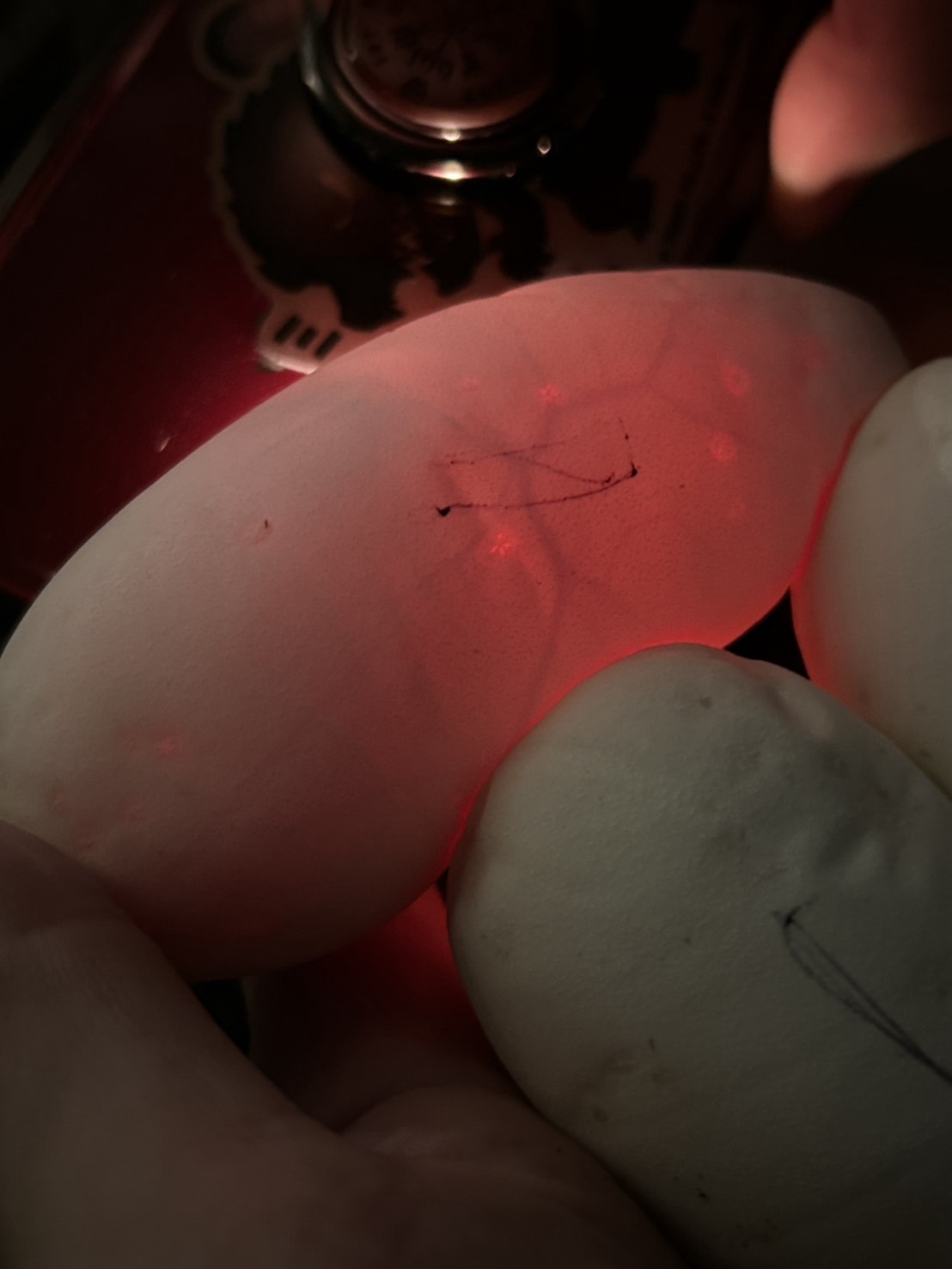
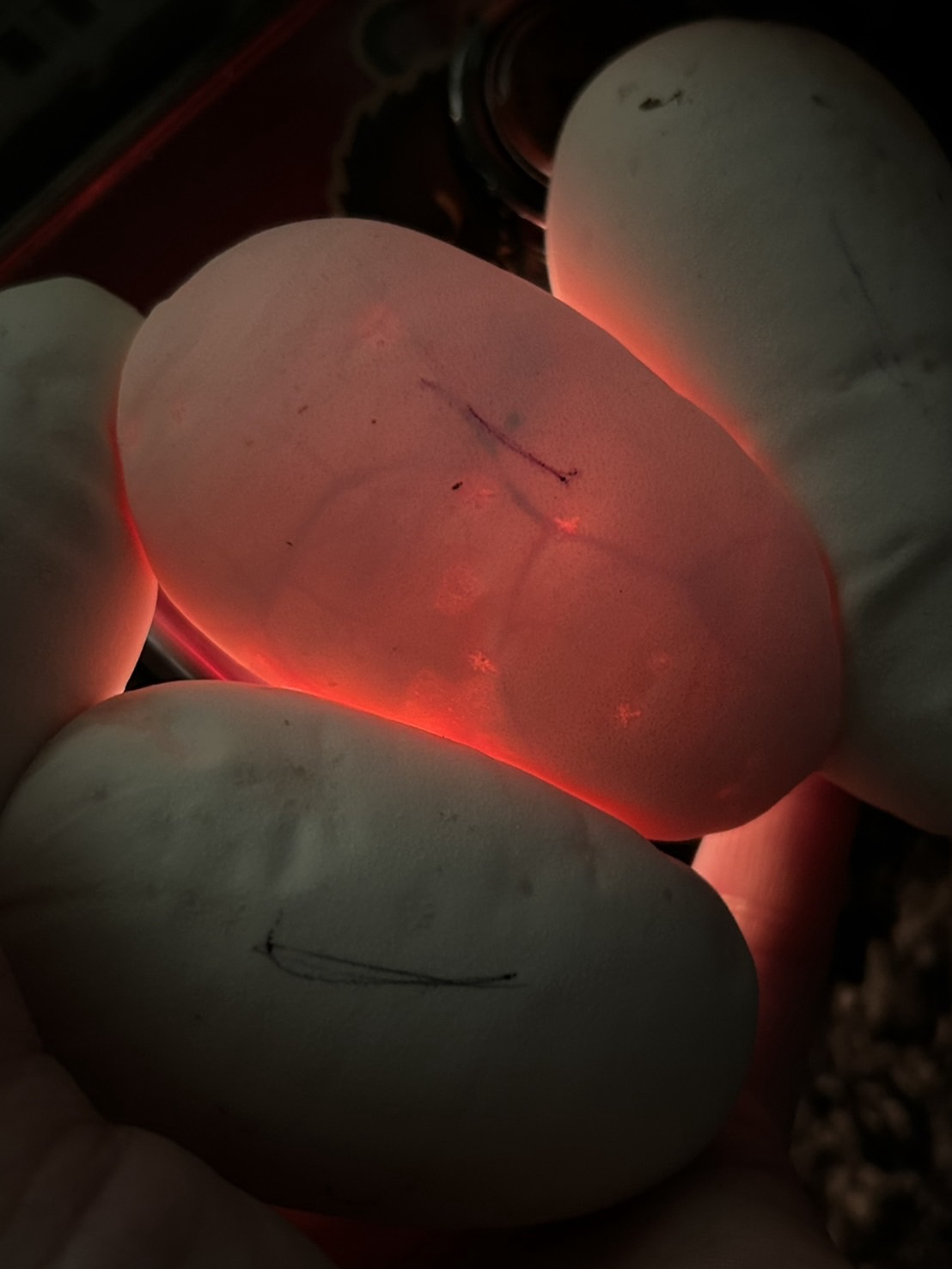
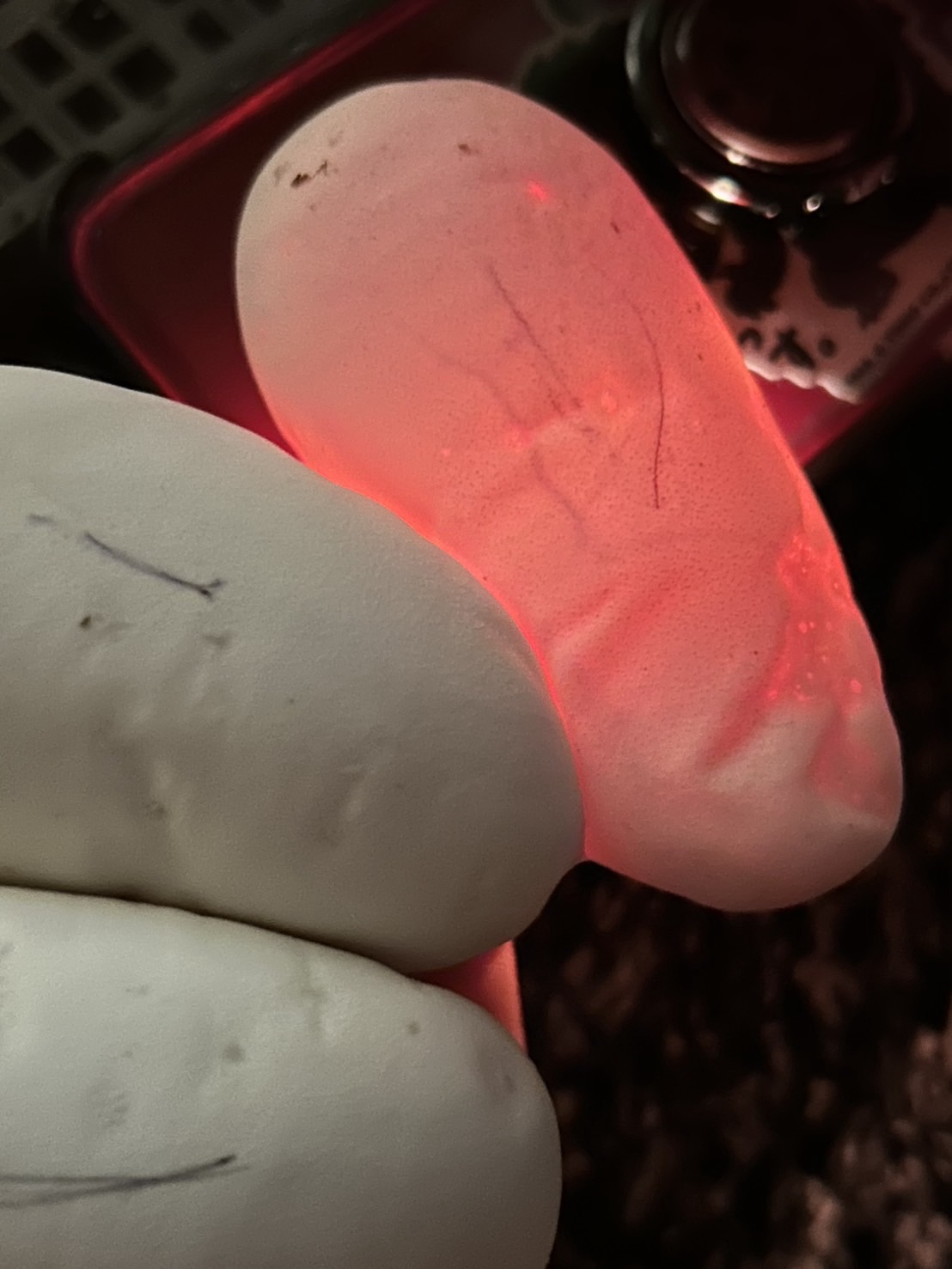
When light was passed through the eggs, blood vessels were visible inside. This confirmed that the eggs are fertile. Infertile eggs typically appear uniform when candled, with no internal structure visible, while fertile eggs show a network of blood vessels associated with embryonic development.
What comes next
Ball python eggs typically hatch in 55 to 60 days when incubated at appropriate temperatures, generally around 30 to 32°C. If there are noteworthy developments during incubation or at hatching, follow-up articles will be posted.